
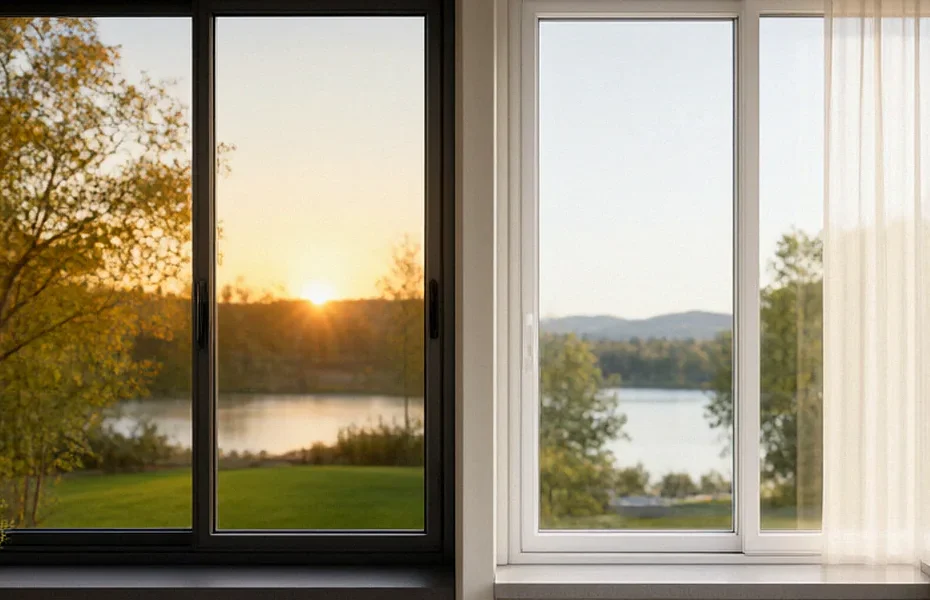
Aluminium vs Vinyl Window Frames: Which Is Right for Your Canadian Self-Build?
You’re standing in the framing aisle of a Canadian big-box store, staring at two window samples and wondering which one won’t leave you shivering in February. One has the slim, modern profile of aluminium; the other is the familiar, chunky white vinyl frame you’ve seen on half the houses in your neighbourhood. Both claim to be “energy efficient.” Both carry a sticker with numbers you’re not sure how to read. And somewhere between the two, your self-build budget is quietly sweating. We’ve been in that aisle ourselves, and we’ve helped enough owner-builders through the same decision to know that the right answer depends on your climate zone, your design goals, and how long you plan to stay in the home.
Why Window Frame Material Matters in Canada
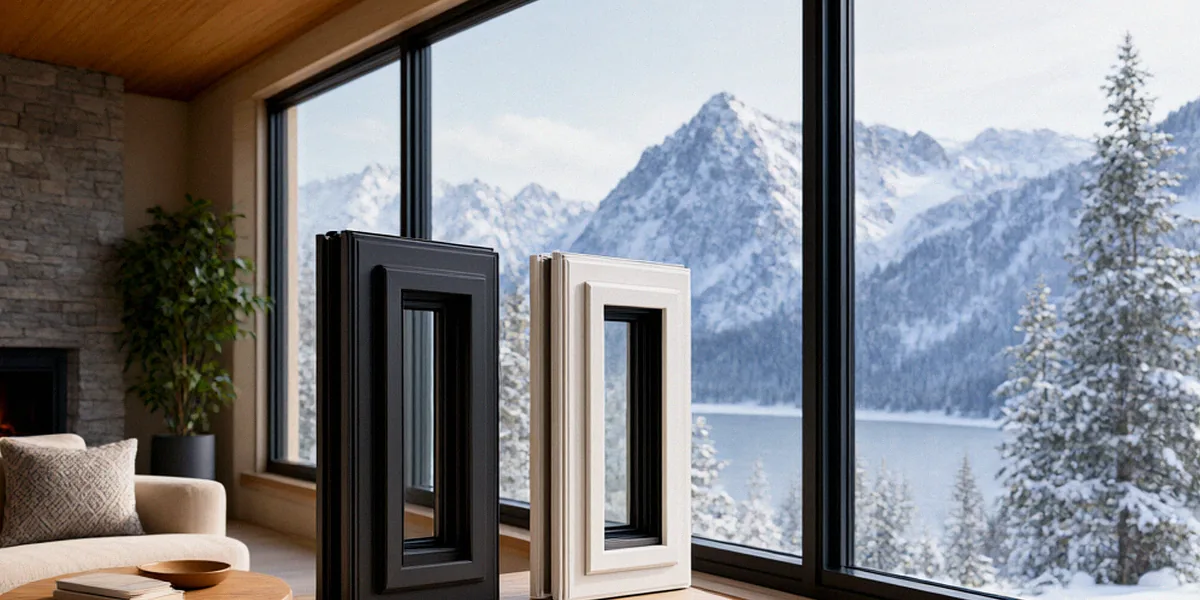
Canada isn’t one climate; it’s several jammed into a single country. A self-build in Victoria deals with damp, mild winters and salt-laden coastal air, while a build in Winnipeg or Saskatoon can see -35°C nights followed by a sunny afternoon that swings the temperature by 20 degrees. NRCan states that windows can account for up to 25% of total home heat loss, which makes your frame choice one of the highest-leverage decisions in the entire envelope. Frame material drives thermal performance, condensation resistance, and how long your windows will actually last before you’re caulking gaps and replacing seals.
The impact of thermal bridging and condensation
Every frame material conducts heat to some degree. Aluminium is an excellent conductor — great for cookware, terrible for windows — which is why a non-thermally-broken aluminium frame will act like a radiator fin, pulling heat out of your living room and dumping it outside. The cold interior surface that results becomes a condensation magnet: you get fogged glass, water pooling on the sill, and eventually mould and rot around the rough opening. Thermally broken aluminium is essential in Canadian winters to prevent condensation, and vinyl sidesteps the problem almost entirely because PVC is a naturally poor conductor.
How Canadian building codes (NBC) influence your choice
The National Building Code sets the baseline, but provinces and municipalities layer their own energy requirements on top — Quebec’s Novoclimat, BC’s Energy Step Code, and Ontario’s SB-12 are all stricter than the federal minimum. In practice, this means most new self-builds in cold regions need windows rated to a specific U-value and ENERGY STAR tier, which narrows your frame options before aesthetics even enter the conversation. Check your local authority’s requirements before you fall in love with a frame style.
Aluminium Window Frames: Strengths and Weaknesses
Aluminium has a well-earned reputation for durability. It doesn’t rot, warp, or crack under UV, and it holds a powder-coated finish for decades. Its slim sightlines let you maximize glass area, which is why modern architectural builds and large sliding doors almost always use aluminium. Brands like Kawneer and Alumil are common in commercial and high-end residential work across Canada, and you’ll find them specified in plenty of architect-led self-builds. The catch is thermal performance: without a proper thermal break, aluminium is a liability in most of the country.
Thermally broken vs non-thermal aluminium
A thermally broken frame inserts a low-conductivity barrier — usually polyamide or polyurethane — between the interior and exterior aluminium profiles. This breaks the heat path and dramatically reduces condensation risk. Non-thermal aluminium is really only appropriate for interior partitions, sunrooms in mild coastal BC, or screened porches. If you’re building a primary residence anywhere the mercury drops below -10°C, insist on thermally broken profiles and ask for the U-value documentation.
Cost and availability in Canada
Aluminium typically runs $500–$1,000+ per window, and custom sizes or architectural colours push you into the upper end fast. Availability is good in major metros and through commercial glazing suppliers, but smaller towns may mean longer lead times. Home Depot and Canadian Tire carry mostly vinyl stock windows, so aluminium usually means a specialty supplier or a direct order from a manufacturer.
Vinyl Window Frames: Strengths and Weaknesses
Vinyl (uPVC) is the default choice for Canadian residential windows for good reason: it’s affordable, energy efficient, and available off the shelf in dozens of standard sizes. Jeld-Wen, Ply Gem, and Gentek are the names you’ll see most often on Canadian job sites and in big-box stores, and their mid-range lines hit ENERGY STAR targets without breaking the bank. The trade-offs are real, though: vinyl can fade in intense sun, and it expands and contracts more than aluminium, which stresses seals over time and can cause operational issues in extreme temperature swings.
Energy performance and condensation resistance
Multi-chambered vinyl profiles with insulated cores and warm-edge spacers deliver excellent U-values, often beating comparable aluminium at the same price point. Because PVC doesn’t conduct heat the way metal does, interior surfaces stay warmer and condensation is far less likely. For a self-build in Ottawa, Calgary, or Halifax, a good vinyl window is usually the path of least resistance to a comfortable, code-compliant envelope.
Durability and maintenance in Canadian winters
Vinyl needs almost no maintenance — an occasional wipe-down and a check of the weatherstripping. Quality frames handle freeze-thaw cycles well, but cheap profiles can become brittle in deep cold, and dark-coloured vinyl in full sun may warp or fade over 15–20 years. Stick with lighter colours, reputable brands, and welded corners rather than mechanically fastened ones if you want the frame to still perform in year 25.
Head-to-Head Comparison for Owner-Builders
Here’s how the two stack up on the metrics that actually matter when you’re the one swinging the hammer and signing the cheques.
- Upfront cost: Vinyl frames typically cost $300–$600 per window; aluminium ranges from $500–$1,000+.
- R-value: Quality vinyl with insulated cores generally outperforms standard thermally broken aluminium; high-end aluminium can match it at a premium.
- Lifespan: Aluminium 30–40+ years with finish maintenance; vinyl 20–30 years depending on colour and sun exposure.
- Resale value: Vinyl reads as “updated and efficient” to most buyers; aluminium reads as “modern” in urban and architectural markets.
Cost per window and long-term value
For a typical 20-window self-build, the gap between vinyl and aluminium can easily hit $6,000–$10,000. That money often buys better glazing on the vinyl side — triple pane, argon fill, low-E coatings — which can outperform a mid-grade aluminium window on energy bills. Canadian Tire and Home Depot pricing on stock vinyl makes it easy to ballpark a budget before you talk to a custom supplier.
Installation complexity for DIYers
Vinyl windows are forgiving. They’re lighter, easier to shim, and most come with nailing flanges designed for straightforward rough-in. Aluminium units are heavier, often larger, and less tolerant of an out-of-square opening — mistakes show up as air leaks and operational problems. If you’re installing solo or with a small crew, vinyl is the friendlier choice.
Aesthetics and curb appeal
Aluminium wins on slim sightlines and modern colour options — think black-framed picture windows and large sliders. Vinyl has improved dramatically, with woodgrain laminates and coloured foils that mimic premium looks, but it still can’t match the profile thinness of a good aluminium system.
Permits, Codes, and Rebates in Canada
Building permits Canada requirements vary by province and municipality, and window replacement rules are a classic source of confusion. Some municipalities treat a like-for-like swap as exempt; others require a permit if you’re changing the opening size, altering egress, or affecting the building envelope. Always call your local authority before ordering.
When you need a permit for window replacement
As a general rule, you’ll likely need a permit if you’re:
- Enlarging or reducing the rough opening
- Changing the number or location of egress windows
- Altering structural framing around the opening
- Working in a heritage-designated property
Leveraging rebates for energy-efficient frames
The Canada Greener Homes Grant offers up to $5,000 for energy-efficient window upgrades, and provincial programs like the Enbridge Home Efficiency Rebate add more on top. Both programs favour windows with strong ENERGY STAR ratings, which in practice means well-insulated vinyl or thermally broken aluminium with high-performance glazing. Get your pre-retrofit evaluation done before you buy — the paperwork order matters.
Our Verdict: Which Frame Should You Choose?
If you’re building a typical Canadian home on a realistic budget, we’d point you toward vinyl. It’s cheaper, easier to install, widely available, and hits the energy targets that matter in cold climates. Aluminium earns its place when the design calls for it — modern architecture, large glazed openings, or coastal builds where salt spray would chew through vinyl hardware and seals.
Best choice for cold Canadian climates
Vinyl, without hesitation. Multi-chambered, triple-pane, argon-filled units from Jeld-Wen, Ply Gem, or Gentek will keep your heating bills sane and your interior surfaces dry through a Prairie February.
Best choice for modern or coastal homes
Thermally broken aluminium from a brand like Kawneer or Alumil for the aesthetic and corrosion resistance. Just confirm the thermal break and finish warranty before you commit — coastal BC and Atlantic Canada demand it.
Hybrid options also exist: aluminium-clad wood, or vinyl frames with aluminium exterior caps, blending the best of both. Worth a look if you’re stuck between the two.
The right choice comes down to your climate zone, your budget, and the design language you’re chasing. Before you order a single window, check your local permit requirements and confirm which rebates you qualify for — those two steps alone can save you thousands and keep your self-build on the right side of the inspector.
FAQ
Are vinyl windows good enough for Canadian winters?
Yes — quality multi-chambered vinyl with triple glazing and warm-edge spacers performs very well in Canadian cold. Stick to reputable brands like Jeld-Wen, Ply Gem, or Gentek and avoid bargain-bin profiles that can become brittle in deep freeze.
Do I really need thermally broken aluminium?
If you’re using aluminium in any part of Canada that sees sustained sub-zero temperatures, yes. Non-thermal aluminium will condense, frost, and bleed heat. Thermally broken aluminium is essential in Canadian winters to prevent condensation and keep your envelope performing.
Can I get a rebate for new windows in Canada?
The Canada Greener Homes Grant offers up to $5,000 for energy-efficient window upgrades, and programs like the Enbridge Home Efficiency Rebate add provincial top-ups. You’ll need a pre-retrofit energy evaluation and qualifying ENERGY STAR ratings to claim.
Do I need a building permit to replace windows in Canada?
It depends on your municipality. Like-for-like swaps are often exempt, but any change to opening size, egress, or structural framing typically requires a permit. Always confirm with your local authority before ordering.
How much should I budget per window?
Vinyl frames typically cost $300–$600 per window, while aluminium ranges from $500–$1,000+. Custom sizes, triple glazing, and architectural finishes push both ranges higher, so budget a contingency for the inevitable surprises.