
Self-Building in the Netherlands: Lessons for Canadians
Last spring, our team spent two weeks cycling between self-build sites in Almere and Utrecht, notebooks in hand, expecting to find a system so foreign it would be useless back home. Instead, we kept having the same reaction: this could work in Canada. The Dutch owner-builders we met were dealing with the same problems our readers write to us about — tight budgets, confusing permits, and the constant question of whether to act as your own general contractor. The difference wasn’t the ambition of the builders. It was the framework around them. What follows is what we learned, and what we think Canadian owner-builders can realistically borrow.
The Dutch Self-Build Model: A Primer for Canadians
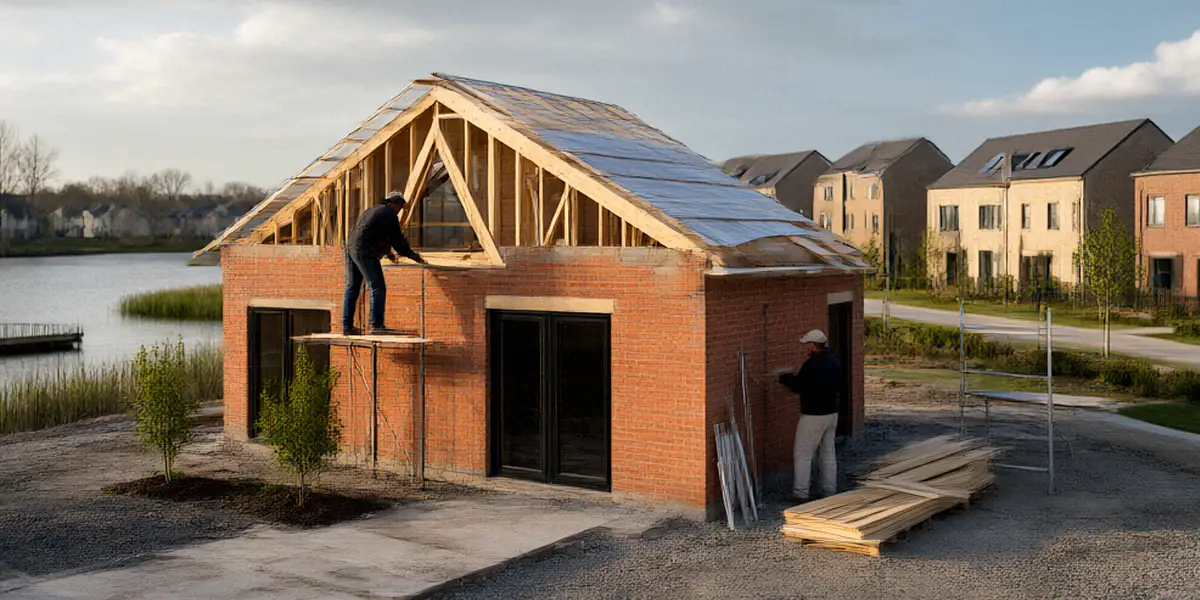
In the Netherlands, self-building isn’t a niche hobby — it’s a recognized housing strategy. The phrase bouwen voor jezelf (“building for yourself”) describes a culture where municipalities actively release serviced plots to individuals, and owner-builders frequently act as their own general contractor, hiring trades directly rather than handing the project to a single builder. Roughly a third of Dutch new-build homes in some municipalities involve some form of private commissioning.
The regulatory backbone is the omgevingsvergunning (environmental permit), a single application covering planning, building, and environmental aspects of a project. Compare that to Canada, where an owner-builder in most provinces juggles a building permit, a development permit, a zoning variance, and sometimes a separate demolition or tree permit — each with its own queue, fee, and reviewer.
How Dutch Municipalities Sell Plots to Owner-Builders
Municipalities often prepare land with roads, sewer, water, and electrical connections already in place, then sell individual plots through a lottery or tender. Buyers know the exact dimensions, zoning envelope, and connection costs before they commit. In Canada, by contrast, most owner-builders buy an unserviced or teardown lot on the open market and absorb the cost and uncertainty of servicing it themselves.
The Role of the ‘Bouwbesluit’ (Building Decree) in Quality Control
The Bouwbesluit is a national building decree setting minimum requirements for safety, health, energy performance, and usability. Because it applies nationwide, a Dutch self-builder in Groningen follows essentially the same technical rules as one in Rotterdam. Canada has no equivalent: the Ontario Building Code and the BC Building Code differ in structure, terminology, and even energy provisions, and each is administered by hundreds of local authorities.
Permits and Regulations: Canada vs. the Netherlands
This is where the comparison gets uncomfortable for Canadian readers. A Dutch owner-builder typically submits one application and deals with one authority. A Canadian owner-builder might submit to a municipality, a conservation authority, and a provincial body, with timelines that vary wildly from one town to the next.
Why Canadian Owner-Builders Face Longer Permit Timelines
Several structural factors explain the gap:
- Fragmented authority: provincial codes set minimums, but municipalities interpret and enforce them differently.
- Discretionary approvals: minor variances and site plan control add months that Dutch applicants rarely encounter.
- Resourcing: small planning departments process applications in batches, so a one-week review can stretch to eight.
- Sequential rather than parallel review: in the Netherlands, planning and technical checks often run concurrently.
In our experience covering Canadian builds, permit delays of four to nine months are common for a custom home, even when the design is straightforward.
Lessons from the Dutch ‘One-Stop Shop’ Permit Approach
The Dutch model works because the applicant faces one counter, one fee schedule, and one set of technical requirements. Canadian municipalities that have moved toward integrated permitting — some in Ontario and BC now offer combined building and planning intake — report faster turnaround and fewer resubmissions. The lesson isn’t to abolish local control; it’s to consolidate the applicant’s experience.
Window Frames and Energy Efficiency: Dutch Innovations for Canadian Homes
If there’s one area where Dutch expertise translates directly to Canadian conditions, it’s windows. The Netherlands has a deep manufacturing base for high-performance frames — Veka and Kömmerling are two names Canadian renovators will recognize — and triple-glazed kozijnen (frames) are standard rather than premium in new Dutch construction.
Triple Glazing and Thermal Bridging: What Dutch Builders Know
Dutch builders treat the frame as part of the thermal envelope, not as a hole cut into it. That means thermally broken profiles, warm-edge spacers, and careful detailing at the wall junction to reduce thermal bridging. These are exactly the details that Passive House standards demand, and they matter enormously in Canadian winters where interior surface condensation and ice buildup at frame edges are common complaints. Canadian programs like EnerGuide reward airtightness and effective R-values, and high-performance Dutch-style frames make hitting those targets substantially easier.
Adapting Dutch Window Frame Systems to Canadian Winters
Not every Dutch profile is a drop-in fit for Canada. Differences in snow load assumptions, wind-driven rain exposure, and the extreme temperature swings of the Prairies mean Canadian buyers should look for frames rated for local conditions and installed by trades familiar with our climate. Still, the underlying design philosophy — deep frames, wide thermal breaks, triple glazing as default — is directly transferable and increasingly available through North American distributors.
Financing and Community: How the Dutch Make Self-Build Affordable
The other half of the Dutch story is money. Self-build in the Netherlands is often a group activity, not a solo project.
Collective Self-Build: A Model for Canadian Cities?
CPO — Collectief Particulier Opdrachtgeverschap, or collective private commissioning — lets groups of households jointly acquire land, hire professionals, and build together. Members share design costs, negotiate trades as a bloc, and often get better mortgage terms because the risk profile looks more like a small development than a single amateur build. Canadian co-housing projects in BC and Ontario follow a similar logic, though without the same municipal land-release support.
CMHC and Dutch Mortgage Differences for Owner-Builders
In Canada, CMHC owner-builder financing allows individuals to access insured mortgages during construction, but the process requires detailed cost estimates, progress inspections, and often a lender willing to manage draws. Dutch owner-builders frequently access construction financing tied to the plot purchase, with the municipality’s pre-servicing removing a major source of lender uncertainty. The gap isn’t generosity — it’s risk. Serviced plots and national standards make Dutch projects easier to underwrite.
What Canadian Owner-Builders Can Borrow from the Dutch
We left the Netherlands convinced that three specific ideas are worth pushing for here at home.
Advocating for Pre-Serviced Plots in Canadian Municipalities
Toronto and Vancouver both face acute housing pressure, and both have underused land that could be released as serviced owner-builder plots. The Dutch experience suggests this can increase density modestly while giving middle-income households a path into homeownership that doesn’t depend on a developer.
Building a Case for National Window Frame Standards
A national performance standard for window frames — harmonizing thermal, structural, and durability requirements across provinces — would let Canadian buyers compare products the way Dutch buyers do, and would give manufacturers a larger, clearer market. Collective purchasing of high-performance frames, organized through owner-builder groups, could bring Dutch-grade glazing within reach of Canadian renovation budgets.
FAQ
Can a Canadian owner-builder legally act as their own general contractor?
Yes, in most provinces. You’ll typically need to declare yourself as the owner-builder on the permit application, and some municipalities require you to demonstrate basic knowledge of the applicable code, such as the Ontario Building Code or BC Building Code. You remain responsible for compliance and inspections.
Are Dutch window frames like Veka and Kömmerling available in Canada?
Several European profile systems are distributed in Canada, though availability varies by region and the specific product line. Look for frames rated for Canadian climate zones and confirm that your installer has experience with triple-glazed, thermally broken systems.
Does CMHC owner-builder financing work for a project built with a group?
CMHC’s owner-builder financing is designed primarily for individuals, but co-housing and collective projects have used alternative structures such as joint ventures or co-operative ownership models. Speak with a mortgage professional familiar with construction financing before committing to a group build.
How does EnerGuide relate to Passive House standards?
EnerGuide rates a home’s energy performance on a standardized scale, while Passive House standards set a stricter, prescriptive target for airtightness and heating demand. A home built to Passive House standards will typically score very well under EnerGuide, but the two programs are not interchangeable.
Is a single-permit system realistic in Canada?
Full adoption is unlikely in the short term because provinces and municipalities guard their authority. However, integrated intake — where a municipality accepts one application covering building and planning — is already happening in some cities and is the most practical near-term reform.
Canada’s regulatory landscape will never look exactly like the Netherlands, and we’re not suggesting it should. But the Dutch approach to permits, window frames, and collective financing is built on pragmatism rather than bureaucracy, and that pragmatism travels well. For Canadian owner-builders willing to adapt the underlying ideas to local codes and climates, the Dutch model offers a genuinely useful blueprint.