
Laundry Room Renovation on a Budget: A Self-Build Guide for Canadians
A cramped, dated laundry room does more than make wash day a chore — it drains your energy every time you haul a basket through a dark, disorganized space, and it quietly drags down your home’s resale value. The good news? You don’t need a contractor’s budget to fix it. We’ve put together a practical, budget-first plan that any owner-builder in Canada can follow, from the first sketch to the final shelf. Whether you’re spending $1,500 or $15,000, careful planning and smart sourcing will get you a laundry room you’re proud to show off.
Plan Before You Demo: Budgeting and Permits in Canada
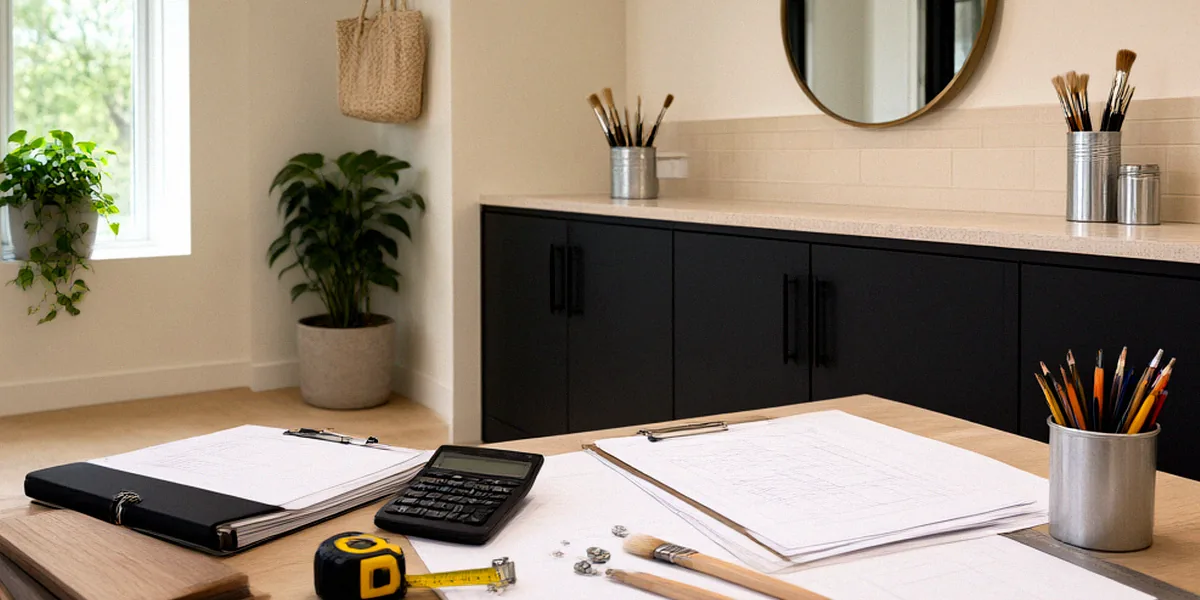
Before you swing a hammer, know your numbers. A cosmetic DIY laundry room refresh — paint, new flooring, shelving, and a fresh counter — typically runs $1,500 to $4,000 in materials if you do the labour yourself. A full renovation with new plumbing rough-ins, electrical circuits, cabinetry, and appliances climbs to $8,000–$15,000, even with you handling demolition and finishing. The difference usually comes down to how much you move.
Setting a Realistic Budget with Contingency
We always recommend building a 15–20% contingency into your budget, because laundry rooms hide surprises: rotted subfloor around the washer, a shut-off valve that won’t close, or wiring that predates your province’s current code. A simple budget breakdown might look like this:
- Flooring (LVP or tile): $400–$1,200
- Paint and primer: $80–$200
- Cabinetry and counter: $300–$1,500
- Plumbing materials and fixtures: $200–$800
- Electrical (materials plus licensed work): $300–$1,200
- Ventilation and window upgrades: $250–$900
- Contingency: 15–20% of the total
When You Need a Building Permit in Canada
Under the National Building Code of Canada and your provincial building code, a permit is generally required whenever you alter plumbing, add or relocate electrical circuits, or make structural changes. Painting, tiling, and swapping a cabinet door do not need a permit. Moving a drain line for a new sink location, adding a 240V dryer circuit, or cutting a new vent opening in an exterior wall almost always does. Permit fees vary by municipality — expect roughly $100–$400 for a small residential alteration. Skipping the permit can void your home insurance and create headaches at resale, so check with your local building department before you start.
Working with a Licensed Electrician or Plumber
In every Canadian province, certain electrical and gas work must be done by a licensed trade, and plumbing permits typically require a licensed plumber to sign off. That doesn’t mean you can’t save money. We handle the demolition, framing, and prep so the pro walks into a clean, ready workspace — that alone can cut labour costs by 30% or more. Get at least two quotes and confirm the tradesperson pulls the permit in their name.
Smart Savings on Materials and Layout
The fastest way to blow a budget is buying everything new. The fastest way to save is reusing what you already have and keeping plumbing runs short.
Reusing and Refinishing Cabinets
Old laundry cabinets are usually solid wood or plywood boxes with dated doors. Sand, prime, and paint them with a quality cabinet enamel, then add new hardware from Canadian Tire for $40–$80. If the boxes are beyond saving, stock upper cabinets from Home Depot Canada or IKEA Canada can be configured for a fraction of custom pricing.
Affordable Flooring Options for Laundry Rooms
Luxury vinyl plank (LVP) is our go-to for laundry rooms: it’s waterproof, stands up to vibration from the washer, and clicks together without adhesive. Expect $2.50–$4.50 per square foot at Canadian Tire or Home Depot Canada, and a laundry room rarely needs more than 50 square feet. Sheet vinyl is even cheaper, and ceramic tile is the most durable if you’re willing to spend a weekend on installation.
Optimizing Layout for Plumbing and Storage
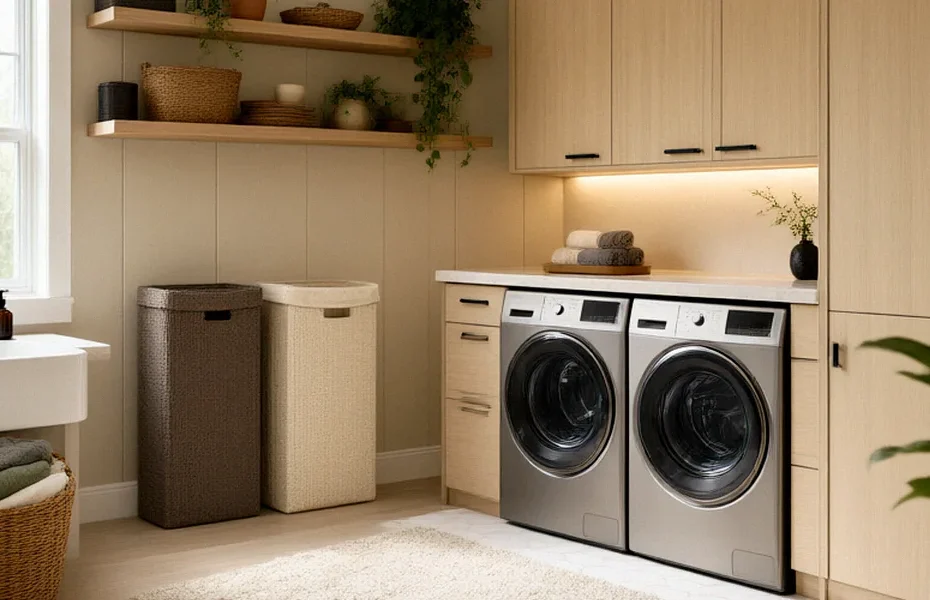
Every inch you move a drain or supply line adds cost and permit complexity. Keep the washer and sink on the same wall as the existing rough-ins, and stack storage vertically instead of spreading out. A side-by-side washer and dryer with a counter above uses the same footprint as a folding table but delivers triple the function.
DIY Plumbing and Electrical: What You Can and Can’t Do
Canadian rules vary by province, but the pattern is consistent: you can do a lot of the work, just not the parts that carry legal liability.
Safe DIY Tasks: Demolition, Painting, and Tiling
Ripping out old cabinets, removing flooring, patching drywall, painting, and tiling are all fair game for a confident owner-builder. Shut off water at the main before demo, and label every wire you disconnect with a photo for reference.
When to Hire a Licensed Electrician
Anything inside your panel, new circuits, GFCI protection in wet locations, and dryer receptacles should be handled by a licensed electrician. Laundry rooms require GFCI protection for receptacles near sinks under the Canadian Electrical Code, and inspectors will check.
Permits and Inspections for Plumbing Changes
If you’re replacing a shut-off valve or swapping a faucet on existing supply lines, most provinces allow a homeowner to do that work. Once you cut into a drain stack or relocate a fixture, you need a permit and typically a licensed plumber. For minor supply-line repairs, SharkBite fittings are a popular push-to-connect option that doesn’t require soldering — just confirm your local authority accepts them for the application before you rely on them behind a wall.
Upgrading Window Frames and Ventilation on a Budget
Laundry rooms generate moisture fast. Without proper ventilation and a sound window, you’re inviting mould, musty odours, and fogged glass.
Choosing Affordable Window Frames for Canadian Climates
Vinyl window frames are the budget champion for Canadian homes — they’re thermally efficient, low-maintenance, and widely available from suppliers like Home Depot Canada. Aluminum frames cost less upfront but conduct cold, which can mean condensation on winter mornings. Look for double-glazed units with a low-E coating and an ENERGY STAR rating suited to your climate zone.
DIY Installation of a Dryer Vent Kit
A rigid metal dryer vent kit costs $30–$60 and is a genuinely DIY-friendly job. Keep the run under 25 feet, use as few elbows as possible, and vent straight outside — never into an attic or crawlspace. Seal every joint with foil tape, not screws, to keep lint from catching.
Improving Air Quality with a Budget Exhaust Fan
A basic 50–110 CFM exhaust fan runs $60–$150 at Canadian Tire. If your laundry room shares a wall with a bathroom, you may be able to tie into the existing duct. Otherwise, a through-wall kit is the simplest option, and it must vent outdoors to meet code.
Finishing Touches That Add Value Without Breaking the Bank
The final 10% of the project is where buyers form their impression — and where you can add the most value per dollar.
DIY Folding Counter and Shelving
A butcher-block or laminate counter over front-load machines gives you a folding station and hides the appliance tops. IKEA Canada sells countertops and brackets that work well for this, and open shelving above adds storage without the cost of upper cabinets.
Smart Storage Ideas Under $200
- Wall-mounted drying rack: $40–$80
- Stackable bins from Canadian Tire: $30–$60
- Over-the-door ironing board holder: $20–$35
- Magnetic detergent caddy: $25–$50
Lighting and Paint Upgrades for Under $150
Swap a single dull bulb for two LED flush-mount fixtures on separate switches, and paint the room in a warm white or soft greige. Bright, clean laundry rooms photograph well and read as “move-in ready” to buyers — a small upgrade with an outsized effect on perceived value.
FAQ
Do I need a permit to renovate my laundry room in Canada?
Only if you’re altering plumbing, adding or relocating electrical circuits, or making structural changes. Cosmetic work like painting, flooring, and cabinetry typically doesn’t require a permit, but always confirm with your local building department.
Can I install SharkBite fittings myself in Canada?
SharkBite fittings are approved in many Canadian jurisdictions for accessible supply-line repairs, but acceptance varies by province and application. Check with your local plumbing authority, and never bury a push-fit fitting inside a closed wall without confirming it’s permitted.
What’s the cheapest flooring for a laundry room?
Sheet vinyl is the least expensive option, followed closely by entry-level LVP from Canadian Tire or Home Depot Canada. LVP offers better water resistance and a more modern look for only slightly more money.
How much does a budget laundry room renovation cost in Canada?
A DIY refresh typically lands between $1,500 and $4,000 in materials. A full renovation with new plumbing, electrical, and appliances runs $8,000 to $15,000, depending on how much you move and how much you do yourself.
Can I vent my dryer through the wall myself?
Yes — a through-wall dryer vent kit is a reasonable DIY job in most provinces. Keep the run short, use rigid metal duct, seal joints with foil tape, and vent directly outdoors. If the wall is load-bearing or you’re cutting through brick, consult a professional first.
A budget laundry room renovation is absolutely achievable for any Canadian owner-builder who plans carefully, respects the permit rules, and spends where it counts — ventilation, lighting, and storage. Start with a realistic number, keep your plumbing where it already lives, and let smart sourcing from Canadian Tire, Home Depot Canada, and IKEA Canada do the heavy lifting. We’d love to hear how your project turns out — share your own tips and before-and-after photos with our community, and help the next owner-builder save time and money.