

Budgeting a Self-Build: Hidden Costs That Catch People Out
When Mark and Jenna started their self-build on a wooded lot near Peterborough, Ontario, they had a detailed budget, a timber frame plan, and a healthy dose of optimism. Then the excavator hit bedrock, the well driller needed to go deeper than anyone expected, and their municipal development charges came in thousands above the estimate. By the time they moved in, they were 32% over budget. We’ve seen this story repeat itself across Canada, and it’s almost never one big disaster — it’s a dozen smaller costs nobody warned them about. Our goal here is to expose those hidden expenses before they hit your bank account, so your self-build stays a dream project instead of a financial cautionary tale.
Land and Site Preparation: The Costs Before You Build
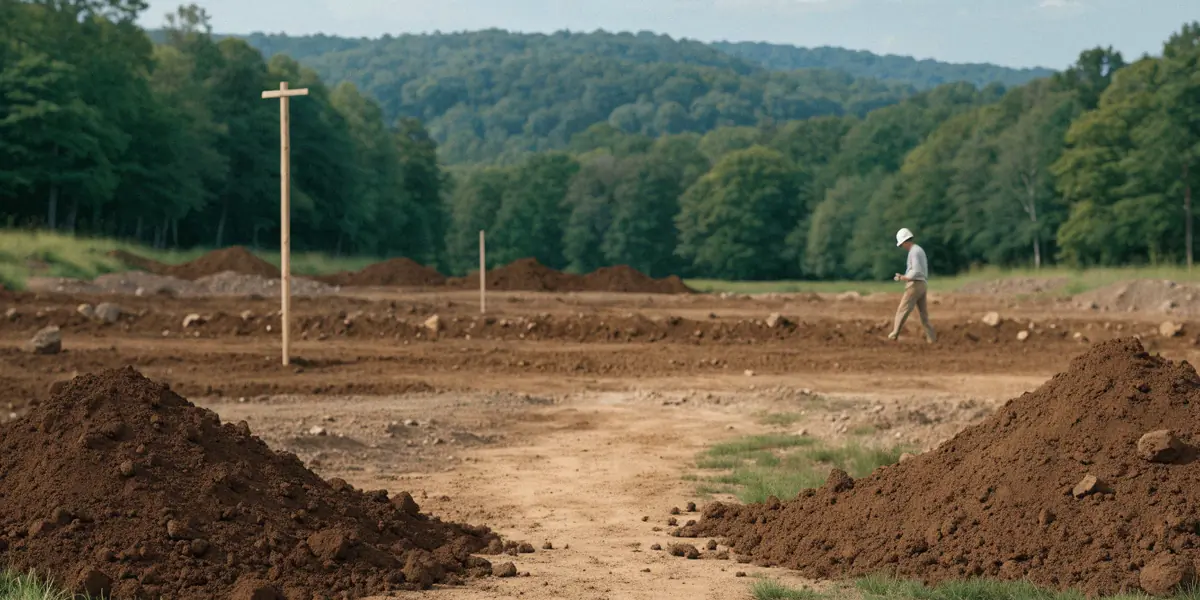
Before a single board is cut, your land will demand money. These costs are easy to underestimate because they depend entirely on your specific site, and in Canada, that site comes with frost, rock, and distance-from-services variables that can swing your budget dramatically.
Land Surveys and Soil Tests: Why They’re Non-Negotiable
A professional land survey typically runs $1,500 to $4,000 depending on lot size and complexity, and a geotechnical soil test adds another $1,500 to $3,500. Skipping either is false economy. Soil tests determine your foundation type, and in areas with high clay content or a high water table, they can push you from a simple slab to a full basement with drainage — a difference of tens of thousands of dollars.
Clearing and Grading: The Impact of Terrain and Trees
Clearing a treed lot sounds straightforward until you factor in stump removal, disposal fees, and the possibility of blasting. Rock removal is one of the most notorious budget-killers in the Canadian Shield and parts of BC. Excavation contractors often bill hourly, so a “surprise” week of rock breaking can add $10,000 to $25,000 without warning.
Servicing Costs: Well, Septic, and Hydro Connections
If you’re outside municipal services, budget carefully:
- Drilled well: $8,000–$20,000+, and deeper drilling means higher cost
- Septic system: $15,000–$30,000, more if the lot fails a percolation test
- Hydro connection: $5,000–$30,000 depending on distance to the nearest pole or transformer
Frost depth matters here too. In much of Canada, water and septic lines must be buried below the frost line — often 4 to 8 feet deep — which increases trenching labour.
Permits, Inspections, and Fees: The Paperwork Trail
The paperwork side of a self-build is where many first-timers get blindsided. Fees vary wildly by province and municipality, and they’re rarely negotiable.
Building Permits: What They Cover and What They Don’t
A building permit covers the structure itself — foundation, framing, electrical, plumbing, and occupancy. It does not cover your septic permit, your well permit, or your electrical service connection, each of which is a separate application and fee. In many municipalities, you’ll also need a development permit before a building permit is even considered.
Development Charges and Impact Fees: Municipal Money Grabs
Ontario development charges are among the highest in the country, often adding $30,000 to $60,000 per new home in growing regions like the GTA and Ottawa Valley. These charges fund roads, water, and community infrastructure, and they rise annually. Always confirm current rates with your municipality before you buy land — they can make or break a project’s viability.
Inspection Fees and Re-inspections: Budget for Mistakes
Most jurisdictions include a set number of inspections in the permit fee, but re-inspections after a failed check often cost $100 to $300 each. If you’re doing your own framing or electrical work, budget for at least a couple of re-inspections. It’s normal, but it’s not free.
Materials and Labour: Where Budgets Quietly Bleed
Even the most carefully costed material list can drift. Prices move, suppliers change quotes, and DIY enthusiasm sometimes meets its match.
Lumber and Material Price Swings: Tariffs and Supply Chains
Softwood lumber tariffs have repeatedly pushed Canadian framing costs up, and prices at Home Depot Canada and Rona can shift month to month. Lock in quotes where possible, and add a 10% buffer to any material estimate older than 30 days. Steel, engineered wood, and windows have all seen similar volatility.
Contractor and Subcontractor Costs: The Markup Reality
General contractors typically add 15% to 25% on top of subcontractor quotes. If you’re acting as your own GC, you save that markup — but you inherit the scheduling, coordination, and liability. Get at least three quotes per trade and confirm whether prices include materials, disposal, and cleanup.
DIY Errors: When Saving Money Costs More
We love DIY, but some jobs punish mistakes harshly. Improper waterproofing, incorrectly flashed windows, or a mis-poured foundation can cost more to fix than hiring a pro would have cost in the first place. Know your limits and hire out the high-risk work.
Insulation, Heating, and Energy Efficiency: The Canadian Climate Factor
In Canada, your building envelope and heating system aren’t optional upgrades — they’re the difference between a comfortable home and a money pit. This is also where the best rebates live.
Insulation Choices: Spray Foam vs. Fiberglass vs. Rigid Board
Spray foam offers the best performance per inch but costs two to three times more than fiberglass batts. Rigid board insulation is excellent for exterior sheathing and basement walls. For a Canadian climate, aim for higher R-values than the minimum code — your heating bills will thank you for decades.
Heating Systems: Heat Pumps, Furnaces, and Radiant Floors
Cold-climate heat pumps now perform well in most of Canada, and they pair beautifully with a tight building envelope. Radiant floors are luxurious but expensive to install. A high-efficiency furnace remains the budget-friendly fallback, especially in Prairie winters.
Energy Efficiency Rebates: Canada Greener Homes Grant
The Canada Greener Homes Grant has helped thousands of Canadians offset the cost of insulation, windows, heat pumps, and air sealing. Eligibility and funding windows change, so check the current program details before you commit to a spec — and keep every receipt.
Timber Frame and Structural Surprises: When Plans Meet Reality
Timber frame homes are beautiful, durable, and — if you’re not careful — surprisingly expensive once you step outside the kit price.
Timber Frame Kits: What’s Included and What’s Extra
Companies like Timber Frame HQ offer kit packages, but a kit rarely includes foundation, roofing, windows, insulation, or mechanical systems. Read the inclusions list line by line. The kit is often 25–40% of the total build cost, not the whole thing.
Engineering and Design Fees: The Hidden Professional Costs
Engineered drawings are mandatory in most jurisdictions, and they’re required for permit approval. Expect $3,000 to $10,000 for structural engineering and design, more for complex designs or sites with challenging soil.
Structural Upgrades: When Soil or Snow Load Demands More
BC Building Code and provincial codes elsewhere specify snow load requirements that vary dramatically by region. A roof designed for Vancouver Island won’t pass muster in the BC Interior or Northern Ontario. If your soil report or snow load demands upgrades, that’s not optional — it’s the law and your safety.
Contingency Planning: How to Protect Your Budget
Every experienced self-builder we’ve talked to says the same thing: the contingency isn’t optional, and it’s almost always used.
Setting a Realistic Contingency: 10-20% Is Not Enough
For a self-build, we recommend 15–20% minimum, and 25% if you’re doing significant DIY or building in a remote area. Canadian winters can stall progress for weeks, adding carrying costs on loans and rentals.
Tracking Expenses: Apps and Spreadsheets That Work
Simple tools work best. A shared Google Sheet with categories for each trade, plus a receipt-scanning app, keeps you honest. Review weekly — monthly is too late to catch drift.
Prioritizing Spend: What to Cut and What to Keep
If you must trim, cut finishes, not structure. Never cut the envelope, foundation, or engineering. Granite countertops can wait; a leaky wall cannot.
FAQ
How much over budget do self-builds typically go?
Industry experience suggests 15–30% overruns are common, especially for first-time self-builders. A robust contingency and realistic site investigation are your best defence.
Do I need a permit for a timber frame home in Canada?
Yes. Every province and municipality requires a building permit, and engineered drawings are typically mandatory for timber frame structures. Requirements vary, so confirm with your local authority.
Are development charges the same across Canada?
No. Ontario development charges are among the highest, while other provinces use different fee structures. Always get written confirmation of current rates before purchasing land.
Can I claim the Canada Greener Homes Grant for a new build?
Eligibility rules change, and the program has historically focused on retrofits of existing homes. Check the current program guidelines before budgeting for rebates.
What’s the biggest hidden cost self-builders miss?
Site servicing — wells, septic, and hydro connections — along with development charges. Both are location-dependent and often underestimated by tens of thousands of dollars.
Hidden costs are part of every self-build, but they don’t have to sink your project. Research your site thoroughly, confirm every fee with your municipality, build in a serious contingency, and stay flexible when reality diverges from the plan. Do that, and you’ll finish your Canadian self-build with your budget — and your sanity — intact.