

Choosing Windows for Cold Climates: Frames, Glazing and Ratings
The first January after we moved into our drafty 1970s side-split, the heating bill landed like a slap. We were paying to heat the neighbourhood, one leaky aluminum slider at a time. The fix wasn’t a new furnace — it was new windows. If you’re planning to build your own home in Canada or tackle a DIY renovation, windows are one of the highest-leverage decisions you’ll make. Get them right and you’ll be comfortable, quiet, and money-ahead for decades. Get them wrong and you’ll be fighting frost and condensation every winter.
Why Windows Matter More in a Canadian Winter
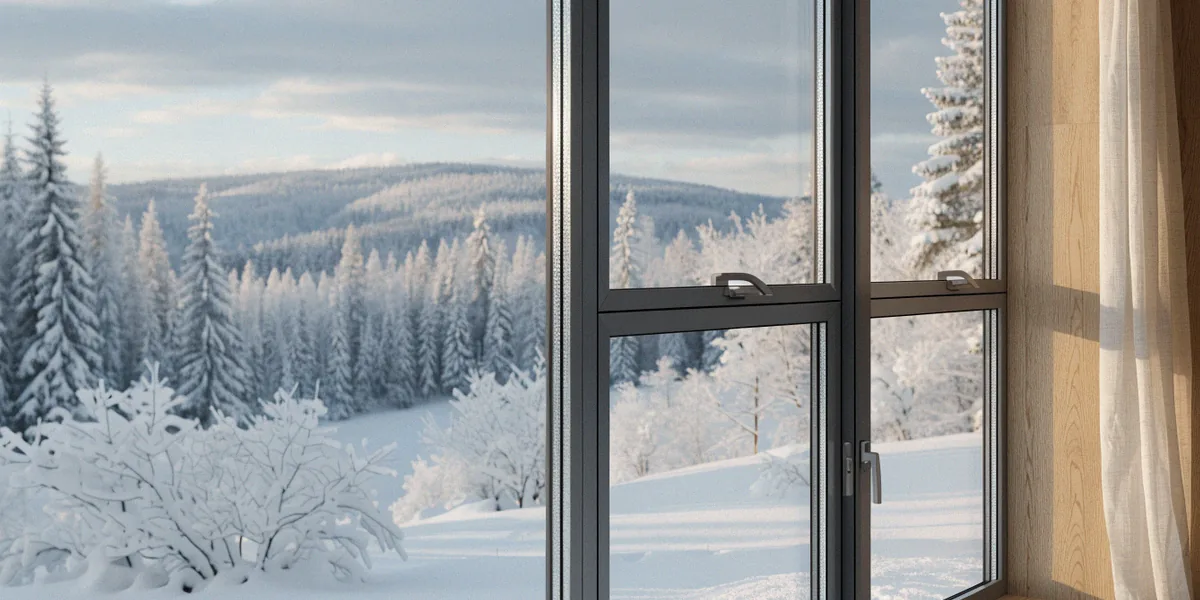
Windows are the weakest thermal link in any wall assembly. Even a well-built wall loses far less heat per square metre than a mediocre window. In older Canadian homes, windows can account for 25–30% of total heating energy use. That’s not a small line item — that’s the difference between a $180 monthly gas bill and a $280 one.
Beyond the dollars, windows drive comfort. A cold pane radiates chill onto your skin even when the thermostat reads 21°C. Poor windows also create downdrafts, uneven room temperatures, and condensation that eventually feeds mold in the framing.
The Cost of Poor Windows: Energy Bills and Comfort
Heat loss through windows happens three ways: conduction through the frame and glass, convection in the air gap between panes, and radiation across the glass surface. A single-pane window has roughly the insulating value of a sheet of cardboard. Upgrading to a high-performance double or triple-pane unit can cut window-related heat loss by 50–70%. For a self-builder, that translates directly into a smaller heating system, lower ongoing costs, and a home that feels warmer at the same thermostat setting.
Condensation, Frost, and Mold: Signs Your Windows Are Failing
Some condensation on the interior of a window on a -25°C morning is normal if indoor humidity is high. Persistent water pooling on the sill, ice forming inside the glass, or frost between panes is not. Those are signs the seal has failed, the spacer is thermally broken, or the window simply can’t handle your climate zone. Left alone, that moisture migrates into drywall and framing and creates ideal conditions for mold.
Frame Materials: Which Stands Up to the Cold?
Frame material determines how much heat escapes around the edges of the glass — and frames are where most window failures start. Here’s how the main options stack up in a Canadian climate.
Vinyl vs. Fiberglass: Thermal Performance and Cost
Vinyl (PVC) is the most common window frame in Canada because it’s affordable, low-maintenance, and performs reasonably well when it’s properly built with multi-chambered profiles and welded corners. The catch: cheap vinyl gets brittle in extreme cold and can sag over time under large glass loads.
Fiberglass frames are stronger, more dimensionally stable, and expand and contract at nearly the same rate as glass — which means fewer seal failures over a 30-year lifespan. They cost 20–40% more than vinyl but typically outperform it thermally. If you’re building in Zones 6–8, fiberglass is often worth the premium.
- Vinyl: Best value, widely available, good for most renovations.
- Fiberglass: Superior durability and cold-weather performance; ideal for high-performance self-builds.
- Wood: Excellent thermal performance but requires maintenance; best used as a hybrid with aluminum cladding.
- Aluminum: Durable but highly conductive — only acceptable with a proper thermal break.
Wood and Aluminum: When They Make Sense (and When They Don’t)
Wood frames insulate beautifully and look great on timber frame houses, but bare wood needs regular sealing and painting. Aluminum-clad wood — like what Marvin offers — gives you the warmth of wood inside and a maintenance-free exterior. Pure aluminum frames without a thermal break are a poor choice for cold climates; they conduct heat straight through and guarantee condensation on the interior. If you want aluminum for aesthetics, insist on a polyamide thermal break.
Glazing Options: Double vs. Triple Pane and Low-E Coatings
Glass is where the real performance gains live. Modern glazing packages combine multiple panes, low-emissivity coatings, warm-edge spacers, and inert gas fills to dramatically reduce heat loss.
Double vs. Triple Glazing: Is the Upgrade Worth It?
Double glazing is the Canadian minimum for new construction in most jurisdictions. Triple glazing adds a third pane and a second air space, pushing U-values down to 0.8–1.1 W/m²K. For Canadian climate zones 6–8 — which covers most of Alberta, Saskatchewan, Manitoba, Ontario’s north, Quebec, and the territories — triple glazing with argon fill and Low-E coating is strongly recommended. The extra cost is typically 15–25% over comparable double glazing, and the comfort difference on a -30°C night is unmistakable.
Low-E Coatings and Gas Fills: How They Work
Low-E (low-emissivity) coatings are microscopically thin metallic layers that reflect radiant heat back into the room. There are different types — some prioritize heating-season performance, others balance solar gain year-round. Argon and krypton gas fills replace the air between panes; argon is cheaper and works well, while krypton performs better in tighter gaps. A warm-edge spacer separates the panes and reduces thermal bridging at the perimeter.
Understanding Ratings: ENERGY STAR, U-Value, and ER Numbers
Window shopping in Canada means decoding a specific set of numbers. Here’s what actually matters.
U-Value and SHGC: What the Numbers Mean
U-value measures heat loss — the lower the number, the better the insulation. A single-pane window sits around 5.6 W/m²K; a good triple-pane unit can hit 0.8. SHGC (Solar Heat Gain Coefficient) measures how much solar heat passes through the glass, from 0 to 1. In cold climates you generally want a moderate-to-high SHGC on south-facing windows to capture free winter heat, and lower SHGC on west-facing glass to prevent summer overheating.
ENERGY STAR Canada and ER Ratings: A Canadian-Specific Guide
ENERGY STAR Canada certification is the key benchmark for window performance in cold climates. To earn the label, a window must meet zone-specific U-value and ER requirements. ER (Energy Rating) numbers are specific to Canada and range from 0 to 100+, factoring in U-value, SHGC, and air leakage. Higher ER is better. For most of Canada, look for ER ratings above 34; in the coldest zones, aim for 40+.
Installation and Permits: What Self-Builders Need to Know
A great window installed badly performs worse than a mediocre window installed well. Air leakage around the frame is the single biggest cause of window-related energy loss in Canadian homes.
DIY Installation Tips for Cold Climates
Proper flashing, sealing, and thermal breaks are non-negotiable. We always recommend:
- Install a sill pan or membrane flashing under every rough opening.
- Use low-expansion spray foam around the frame, not fiberglass batt.
- Tape the exterior weather barrier to the window flange with compatible flashing tape.
- Seal the interior with a vapour-permeable air barrier, not poly, to avoid trapping moisture.
- Check for thermal bridging at the rough opening — a wood buck or thermal break helps.
Building Permits and Energy Code Compliance in Canada
Building permits may require window specifications as part of energy compliance documentation. Most provinces reference the National Building Code or a provincial energy code (like the BC Energy Step Code or Ontario’s SB-12), which specify maximum U-values or minimum ER ratings. Have your window supplier provide certified performance data before you submit your permit application — inspectors will ask for it.
Top Window Brands and Where to Buy in Canada
Brands like Jeld-Wen, Marvin, and All Weather Windows are commonly used in Canadian self-builds. Jeld-Wen offers broad availability and price points through big-box retailers. Marvin is a premium choice for custom and timber frame builds. All Weather Windows is a Canadian manufacturer with strong cold-climate products and regional dealer support.
National Brands vs. Local Manufacturers
National brands offer consistent quality and warranty coverage. Local Canadian manufacturers — like All Weather Windows, Duxton Windows, and regional fabricators — often provide better lead times, direct support, and products tuned to local climate zones. For a self-build, we usually recommend getting quotes from both.
Where to Buy: Big Box, Dealers, and Direct
Home Depot Canada and Lowe’s Canada carry standard sizes and popular models — convenient for renovations but limited for custom builds. Specialty dealers offer better consultation, installation support, and access to high-performance lines. Direct-from-manufacturer is often the best route for a full self-build with custom sizing and energy compliance documentation.
FAQ
Are triple-pane windows worth it in Canada?
Yes, especially in climate zones 6–8. Triple glazing with argon fill and Low-E coating reduces heat loss significantly, improves comfort near windows, and cuts condensation. The payback period is longer than double glazing, but the comfort and durability gains are real.
What ER rating should I look for in a Canadian window?
For most of Canada, aim for an ER of 34 or higher. In colder zones, target 40+. Higher ER means better overall energy performance, factoring in U-value, solar gain, and air leakage.
Do I need a permit to replace windows in Canada?
It depends on your municipality. Like-for-like replacements often don’t require a permit, but changing window sizes, altering structural openings, or upgrading to meet energy code typically does. Check with your local building department before starting.
Which frame material is best for a cold climate?
Fiberglass offers the best combination of thermal performance, durability, and low maintenance. Vinyl is a solid budget option. Aluminum-clad wood works well for timber frame houses when aesthetics matter.
Can I install windows myself?
Yes, if you’re comfortable with framing, flashing, and air sealing. Poor installation is the leading cause of window failure and energy loss, so if you’re unsure, hire a certified installer — especially for high-performance triple-pane units.
Investing in high-performance windows is one of the best decisions you can make for a self-build in Canada. The upfront cost stings, but the payoff — lower bills, fewer drafts, no frost on the sills, and a home that feels warm even in February — is worth every dollar. Choose your frames, glazing, and ratings with your climate zone in mind, and you’ll be glad you did for the next 30 winters.