
Budgeting a Self-Build: Line by Line
Our first self-build budget missed the mark by 20%, and the reason still stings: we forgot permit fees and site servicing. We had the lumber package priced to the board foot and the window quote signed, but we never accounted for the $14,000 in development charges, the $9,500 well, or the $6,000 septic design. When those invoices landed, our contingency vanished in a week. That experience taught us that a self-build budget is not a single number — it is a line-by-line document you build before you break ground and revise every month until you get the occupancy permit.
Land and Site Preparation: The Costs You Can’t Skip
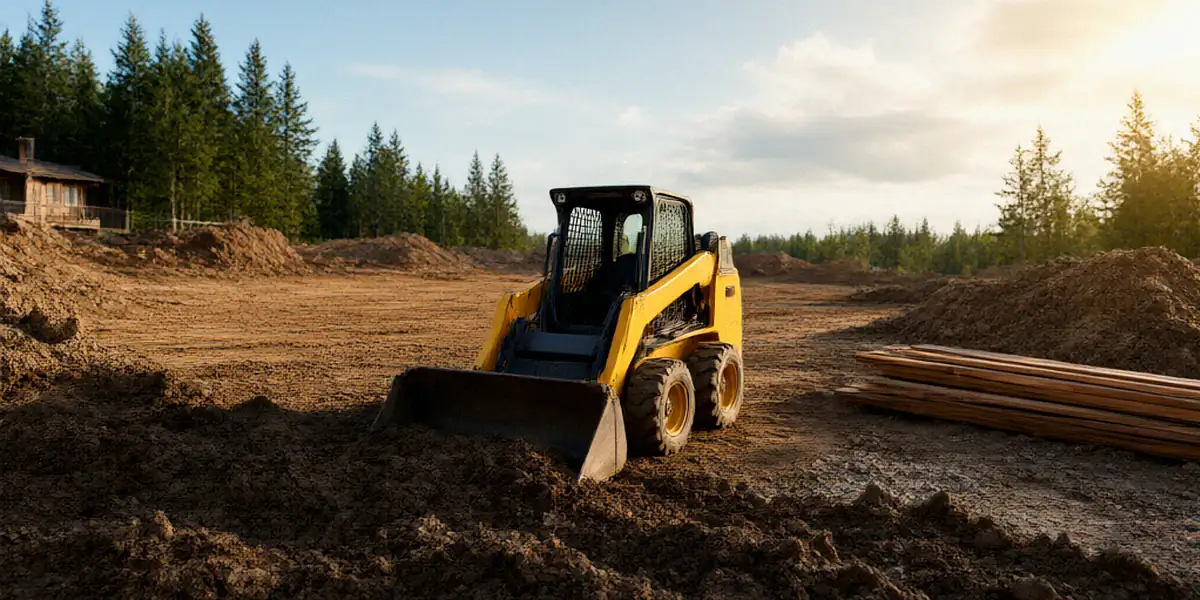
Before a single nail is driven, land and site work can consume 20 to 30 percent of your total project cost. These are the numbers that banks and CMHC guidelines for owner-builders scrutinize most closely, because they are hard to finance after the fact.
Land Acquisition and Due Diligence
The purchase price is only the beginning. Budget for a boundary survey ($2,000–$5,000), a geotechnical report ($1,500–$4,000), and a title search with legal fees ($1,500–$3,000). If the lot is rural, confirm zoning with the local municipality before you buy — minimum lot frontage and setback rules vary widely across provinces. We also recommend a percolation test early, because a failed perc test can turn a $90,000 lot into an unbuildable one.
Site Servicing: Well, Septic, and Utilities
In unserviced areas, a drilled well runs $8,000–$20,000 depending on depth and bedrock, and a septic system with field bed costs $12,000–$30,000. Hydro connections can range from $3,000 for a simple pole drop to $25,000 if you need a transformer upgrade. Provincial regulations govern setbacks, and CMHC guidelines for owner-builders require you to document these costs for financing. Get written quotes before you finalize your land offer.
Excavation and Grading
Machine time is billed hourly, and rock is the great unknown. A standard excavation for a full basement might run $8,000–$15,000, but blasting rock can add $10,000–$40,000 in a single day. Grading, topsoil, and drainage add another $5,000–$12,000. Always include a rock clause allowance in your budget.
Permits, Fees, and Professional Services
This is the category that broke our first budget. Building permits in Canada are not a flat fee — they scale with project value and vary dramatically by municipality.
Building Permits and Development Charges
In Toronto, a building permit for a new single-family home is calculated on floor area and can exceed $20,000, plus development charges that often top $50,000 per unit. Vancouver’s permit fees and development cost levies can push past $60,000 for a detached home. Smaller municipalities charge less, but expect $3,000–$12,000 in permit fees almost anywhere. Development charges, school levies, and parkland dedication fees are separate line items — never lump them together.
Engineering and Architectural Fees
You will need a stamped structural drawing for anything beyond a simple truss package. Expect $2,500–$8,000 for structural engineering, $1,500–$4,000 for HVAC design, and $5,000–$20,000 for architectural drawings if you are not using a stock plan. A septic designer, surveyor, and energy advisor round out the professional team.
Energy Modelling and EnerGuide
EnerGuide energy ratings are required for many rebate programs and increasingly for permit compliance in provinces like British Columbia and Ontario. A pre-build energy model costs $500–$1,500, and the blower-door test at completion runs $300–$600. If you are chasing a net-zero or Step Code target, budget for a second modelling pass after design changes.
Structural Materials and Labour: Where the Big Money Goes
Structure typically accounts for 25–35 percent of a self-build budget. The material choice drives both cost and schedule.
Lumber and Framing Packages
A framing package for a 2,000 sq ft home runs $35,000–$60,000 depending on lumber prices and roof complexity. Canadian suppliers like Kent Building Supplies and Home Hardware offer contractor pricing and will quote a full takeoff from your plans. Always add 10 percent waste factor for cuts and defects.
Alternative Wall Systems: ICF and SIPs
Insulated concrete forms (ICF) cost $12–$20 per square foot of wall, installed, versus $8–$14 for stick frame. Structural insulated panels (SIPs) land around $14–$22 per square foot but go up fast and deliver excellent airtightness. Both reduce labour hours, which matters if you are paying a crew by the day.
Hiring vs. DIY Labour
Our rule: DIY what you can do safely and repeatedly, hire what requires a licence or a warranty. Electrical, gas, and septic must be done by licensed trades in every province. Framing, drywall, and painting are fair game for owner-builders. A general labourer costs $25–$40 per hour in most Canadian markets, and a framing crew runs $60–$90 per hour.
Windows, Doors, and Envelope: Balancing Cost and Performance
Windows are the single most misunderstood line item in a self-build budget. They are also where cheap choices hurt most in a Canadian winter.
Window Frames: PVC, Wood, Aluminum, and Fiberglass
PVC frames are the budget standard, wood offers the best thermal performance but needs maintenance, aluminum is durable but conducts cold unless thermally broken, and fiberglass sits in the premium tier. Brands like JELD-WEN, Ply Gem, and Duxton Windows all offer Canadian-climate-rated lines. Expect $600–$1,200 per window for mid-range PVC and $1,500–$3,000 for fiberglass.
Glazing and Energy Ratings for Canadian Winters
Look for triple glazing with a U-value of 1.0 W/m²K or lower in climate zones 6 and 7. Low-E coatings, argon fill, and warm-edge spacers are not upgrades — they are baseline. EnerGuide energy ratings and ENERGY STAR certification help you compare units objectively across brands.
Installation and Flashing Details
Even the best window fails if the flashing is wrong. Budget $150–$350 per opening for professional installation, and insist on a sill pan, back dam, and taped weather-resistive barrier. This is the detail that keeps water out of your walls for the next 30 years.
Interior Finishes and Systems: The Budget Creep Zone
This is where budgets quietly die. Every upgrade feels small, and they compound.
Mechanical Systems: HVAC, Electrical, Plumbing
A heat pump or furnace from Napoleon or Carrier runs $6,000–$15,000 installed, plus $3,000–$6,000 for ductwork. Electrical rough-in and panel for a 2,000 sq ft home is $8,000–$15,000. Plumbing rough-in and fixtures land at $6,000–$14,000. HRV systems are essential in airtight homes and add $2,000–$4,000.
Kitchens, Bathrooms, and Flooring
Kitchens consume 10–15 percent of most build budgets. Cabinets alone run $15,000–$40,000. Bathrooms cost $12,000–$30,000 each once tile, fixtures, and waterproofing are included. Flooring from Rona or a local supplier ranges from $3 per square foot for laminate to $12+ for engineered hardwood.
Lighting and Smart Home Upgrades
Pot lights, fixtures, and switches add $3,000–$8,000. Smart home wiring, thermostats, and security add another $2,000–$6,000. Decide early — retrofitting smart switches into a finished wall is far more expensive than roughing in the wiring now.
Contingency and Hidden Costs: Protecting Your Budget
If your budget has no contingency line, it is not a budget — it is a wish.
Setting Your Contingency Percentage
We recommend 10 percent for a well-scoped renovation and 15 percent for a ground-up self-build. On a $500,000 project, that is $75,000 set aside and not touched for finishes.
Common Surprises: Rock, Water, and Code Changes
- Rock excavation: $10,000–$40,000
- High water table requiring drainage or sump: $5,000–$15,000
- Code upgrades triggered by inspection: $3,000–$20,000
- Tarion warranty enrolment in Ontario: $1,000–$3,000 plus enrolment fees
- Material price escalation on a delayed build: 5–15 percent
Tracking and Adjusting as You Build
Reconcile every invoice against your line items weekly, and update your forecast monthly. When one line goes over, find another line to pull from — never borrow from contingency without documenting why.
FAQ
How much should an owner-builder budget for permits in Canada?
Expect $3,000–$12,000 in most municipalities, but major cities like Toronto and Vancouver can exceed $50,000 once development charges and levies are included. Always request a written fee schedule from the local building department before finalizing your land purchase.
Do I need a Tarion warranty as an owner-builder in Ontario?
If you build and occupy your own home in Ontario, you may be exempt from Tarion warranty enrolment, but you must still register with Tarion and follow the Ontario Building Code. If you sell within seven years, warranty obligations can apply retroactively. Confirm your status with Tarion before you start.
What window frames perform best in Canadian winters?
Fiberglass and wood frames with triple glazing and warm-edge spacers deliver the best thermal performance in climate zones 6 and 7. PVC is a strong budget option if you choose a Canadian-climate-rated line from a brand like JELD-WEN or Ply Gem.
How much contingency should a self-build budget include?
We recommend 10 percent for renovations and 15 percent for ground-up self-builds. On a $500,000 project, that is $75,000 held in reserve and not allocated to finishes or upgrades.
Does CMHC finance owner-builder projects?
Yes. CMHC guidelines for owner-builders allow mortgage loan insurance on self-builds, but you must provide detailed plans, a cost breakdown, and proof of builder experience or a qualified supervisor. Expect a progress-draw structure rather than a single advance.
Your line-by-line budget is a living document, not a one-time spreadsheet. Revisit it monthly, reconcile every invoice, and adjust your forecast before the next draw. Owner-builders who track their numbers weekly finish projects without financial strain — and that is the real measure of a successful self-build.